The Milky Way Galaxy Rotated 90 Degrees: Traces of a Past Collision
28.07.2026 19:50 · 3 hour ago · Credibility: 57% · 5
Point Summary
- ▸It turns out that the Milky Way Galaxy was rotated 90 degrees as a result of a collision in the past.
- ▸The culprit behind this event is shown to be the merger with the Gaia-Sausage-Enceladus dwarf galaxy.
- ▸Traces of the collision can be seen from the direction of movement of the stars and the structural change of the galaxy.
- ▸Scientists emphasize that this event is a critical turning point in the evolution of our galaxy.
A dramatic event in the past of the Milky Way Galaxy attracts the attention of astronomers. New research reveals that our galaxy rotated 90 degrees as a result of a collision with a dwarf galaxy called Gaia-Sausage-Enceladus about 8 to 10 billion years ago. This event left permanent scars on the structure of our galaxy and caused significant changes in the direction of stars' motion.
What happened?
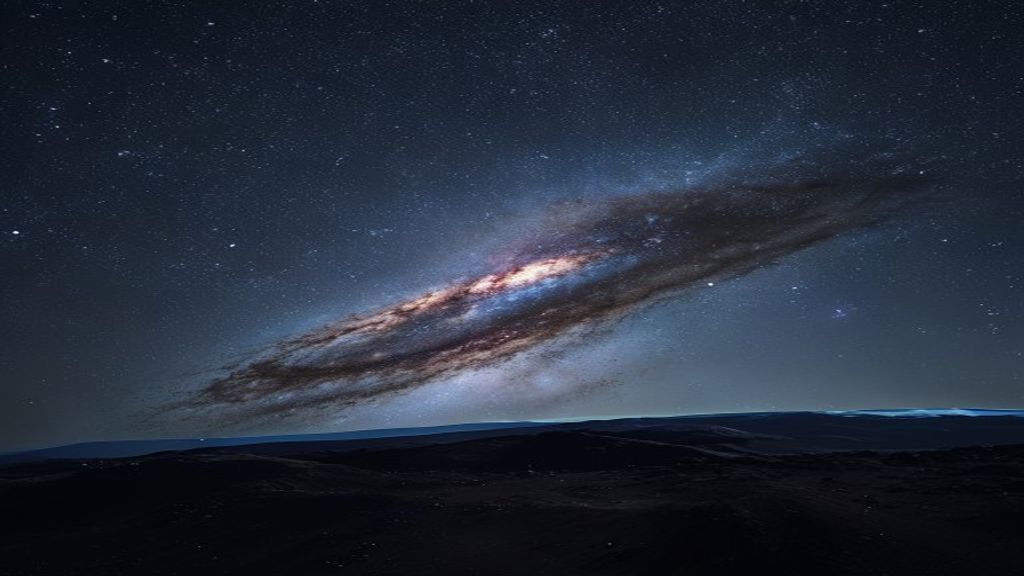
The collision with the Gaia-Sausage-Enceladus dwarf galaxy radically changed the disk structure of the Milky Way. In this event, conveyed in the artist's impression, the stars of the dwarf galaxy, as they moved towards the disk of the Milky Way, caused a significant shift in the rotation axis of our galaxy. This shift played a critical role in the galaxy reaching its current appearance. Researchers state that after this collision, the disk plane of our galaxy rotated almost 90 degrees.
background
The evolution of the Milky Way has been a subject of research for astronomers for many years. In the past, various theories have been put forward regarding the formation of our galaxy, but the role of the Gaia-Sausage-Enceladus dwarf galaxy has begun to be understood more clearly with observations made in recent years. This dwarf galaxy merged with the Milky Way approximately 8 to 10 billion years ago, causing permanent changes in the structure of our galaxy. There was no further information about the details of this event in the source text.
Why is it important?
This discovery is of great importance for our understanding of the evolution process of the Milky Way. The 90-degree rotation of our galaxy's disk plane has had profound effects on the distribution of stars and the overall structure of the galaxy. This event helps us understand how our galaxy arrived at its current appearance. It also raises questions about whether similar collisions have occurred in other galaxies of the universe. The source text did not include any details about the effects of this event on future galactic evolution.
What do experts and parties say?
There was no direct expert opinion or quote regarding this incident in the source text. However, the image conveyed by the artist's impression shows the integration of the stars of the Gaia-Sausage-Enceladus dwarf galaxy into the Milky Way and the change in the disk plane of our galaxy. This visual helps researchers understand the dynamics of the event.
What to watch next?
This discovery will stimulate further research into the evolution of the Milky Way. Future observations and data analysis may reveal traces of other collisions in our galaxy's past. Additionally, data obtained from projects such as the Gaia mission will allow this phenomenon to be studied in more detail. There was no concrete road map in the source text for following this event.
Nokta Analysis
Language Fluency: 90%This news is based on a single source only and has not been cross-verified with independent sources. The source text describes the collision with the Gaia-Sausage-Enceladus dwarf galaxy, which forms the basis of the event, and its impact on the Milky Way Galaxy. However, the accuracy of the information contained in the news has not been confirmed by independent sources. Although the visual in the source text helps us understand the dynamics of the event, there is no independent verification of this visual. Therefore, it is important to carefully evaluate the claims in the news and await the results of future research.
Transparent Sources
Related News
SpaceX Launches 24 Starlink Satellites from Vandenberg with Falcon 9
Scientists discovered the first satellite outside the Solar System: 'Wobbing' movement was a clue

New theory that humans may have come to Earth from space shakes the scientific world