Magnetic field mystery behind Jupiter's giant moons, Saturn's only Titan
28.07.2026 06:30 · 13 hour ago · Credibility: 54% · 8
Point Summary
- ▸Jupiter's strong magnetic field may have created a sheltered zone around the young planet that allowed giant moons to form and survive.
- ▸Since Saturn's magnetic field cannot provide this protection, it is claimed that the planet's largest satellite, Titan, remains almost alone.
- ▸According to the research, the role of magnetic fields in the formation of planetary systems may also affect the distribution of moons in the Solar System.
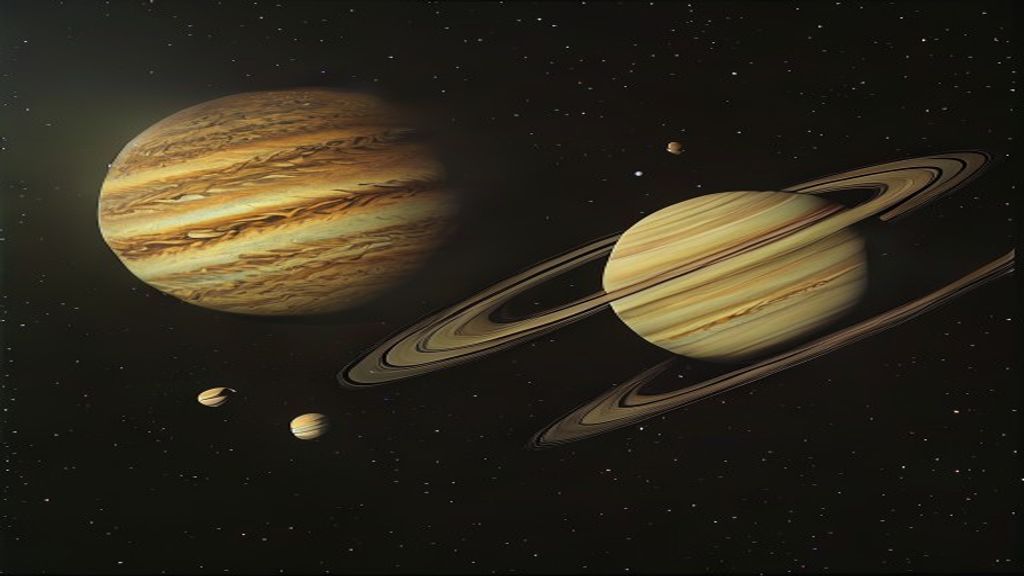
The distribution of moons of planets in the Solar System has long been a subject that has attracted the attention of scientists. While there are four giant moons (Io, Europa, Ganymede and Callisto) around Jupiter, it is observed that Saturn's largest moon Titan remains almost alone. A new study investigating the reason behind this difference suggests that young Jupiter's strong magnetic field played a critical role in the formation and survival of moons.
What happened?
According to the study, the intense magnetic field that Jupiter had during its youth may have created a protected zone in the immediate vicinity of the planet. This region may have helped protect the moons against harmful radiation from the Sun and other external factors, thus allowing the formation and survival of massive moons such as Io, Europa, Ganymede, and Callisto. However, since Saturn's magnetic field does not provide this level of protection, it is thought that the planet's largest satellite, Titan, remains almost alone. Researchers state that this difference reveals the role of the planets' magnetic fields in the formation of satellites.
background
During the formation of the Solar System, the magnetic fields and gravitational effects of the planets were among the determining factors in the formation of satellites. Jupiter's massive size and strong magnetic field may have created a dense shielded zone in the planet's immediate vicinity. This protection zone may have protected the satellites against radiation from the Sun and other external factors, thus facilitating the formation and survival of the satellites. Since Saturn's magnetic field does not provide this level of protection, it is thought that the planet's largest satellite, Titan, remains almost alone. No details about the background on this subject were included in the source text.
Why is it important?
This research is of great importance in understanding the role of planets' magnetic fields in the formation of satellites. This theory, which explains the formation and survival of Jupiter's massive moons, may also help us understand the distribution of moons of other planets in the Solar System. Additionally, this study offers a new perspective for understanding the formation and evolution of planetary systems. The source text did not include any details about possible consequences on this issue.
What do experts and parties say?
There was no explanation on this subject in the source text.
What to watch next?
Researchers state that more data and model studies are needed to test the accuracy of this theory. Future observations and simulations may more clearly reveal the role of planets' magnetic fields in the formation of moons. There were no details about the follow-up steps on this issue in the source text.
Nokta Analysis
Language Fluency: 90%This news is based on a single source and has not been cross-verified with independent sources. The source text contains a theory proposing the relationship between Jupiter's magnetic field and the formation of its moons, but the accuracy of this theory has not yet been reported in other publications. Since the news is based on scientific research, readers are advised to follow developments on this subject and wait for the results of future studies. Although the richness of the source text is limited, the main claim of the news is conveyed faithfully to the source text.
Transparent Sources
Related News

New theory that humans may have come to Earth from space shakes the scientific world
NASA Astronaut Chris Williams Returned to Earth
NASA Astronaut Chris Williams Will Livestream His ISS Mission at Johnson Space Center on August 4