The Dark Legacy of the Spanish Civil War: The Silent Echo of Deportations and Camps
22.07.2026 14:42 · 6 day ago · Credibility: 37% · 51
Point Summary
- ▸The third episode of Garance Muñoz's 'Spain: Echo of Silence' podcast series focuses on the mass deportation following the Spanish Civil War.
- ▸With the defeat of the Republican forces, the passage of thousands of Spanish refugees to the French border and the difficult conditions they faced are discussed.
- ▸Living conditions in refugee camps are examined in depth through the themes of the humanitarian crisis of the period and historical silence.
The Spanish Civil War opened one of the deepest wounds in 20th century European history, displaced millions of people and radically changed the political fate of the continent. The podcast series 'Spain: The Echo of Silence' (Espagne: l'écho du silence), produced by journalist Garance Muñoz and attracting great attention, continues to reveal the often overlooked human dimensions of this tragic period. The third part of the series focuses on the mass migration wave in the final stages of the war and the camp life these people encountered on the French border, which is often described as 'temporary' in history books but actually contains deep traumas.
In the final days of the war, especially in early 1939, when the defeat of the Republican forces became certain, hundreds of thousands of civilians and soldiers embarked on a desperate journey north towards the French border to escape the oppression of the Franco regime. This process, known in history as the 'Retirada' (Retreat), was one of the largest refugee movements Europe had ever seen. In this chapter, Muñoz examines not only statistical data, but also the individual tragedies experienced at that time and the cold reality that refugees faced on the other side of the border.
What happened?
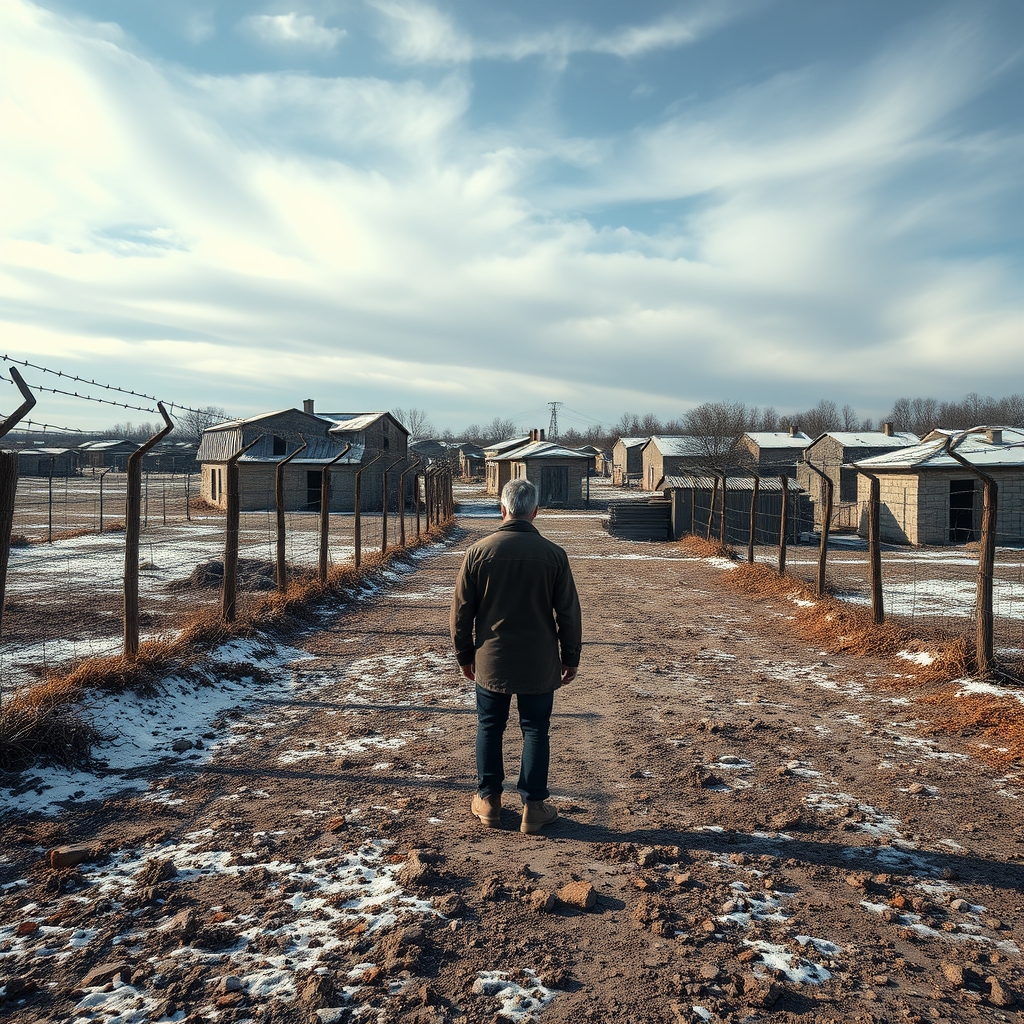
When refugees escaping from Spain crossed the French border, they encountered concentration camps surrounded by barbed wire, lacking hygienic conditions and under supervision, rather than freedom. According to the information in the source text, these camps quickly turned the refugees' hopes of 'salvation' into disappointment. The camps, especially those established in coastal areas such as Argelès-sur-Mer, were trying to accommodate thousands of people without any infrastructure in the freezing cold of winter.
Refugees had to struggle not only with physical hunger, but also with the exclusion and humiliation of being a mass that the French authorities considered a 'security risk'. The podcast series emphasizes that these camps became not only shelters, but also 'spaces of silence' where the ideals and hopes of Spanish Republicans were imprisoned. This environment, where people were restricted from speaking their own language and preserving their cultural identities, went down in history as the places where exile psychology was most severely experienced.
Background
The Spanish Civil War was a bloody conflict that lasted from 1936 to 1939 and divided the country. This process, which resulted in the victory of the nationalist forces led by General Francisco Franco, opened the door to a dictatorship in Spain that would last for many years. Towards the end of the war, especially with the fall of the Catalonia region, the only way out for civilians, intellectuals and soldiers on the Republican side was to cross the French border.
The French government was unprepared for such a large influx of refugees at the time and chose to treat the situation as a 'problem of public order'. While some of the refugees were later sent back to Spain, some of them had to face much more difficult conditions, even concentration camps, in Nazi-occupied France with the start of World War II. Muñoz's work reconstructs the almost forgotten details of this historical process through the testimonies and archive records of the period.
Why is it important?
This podcast series not only describes a historical event in chronological order, but also questions how collective memory is shaped through the concept of 'silence'. The repressive policies implemented during the Franco period in Spain prevented the stories of exiled people from being heard both in Spain and in the rest of Europe for many years. This silence served as a cover to cover the grievances.
This work by Garance Muñoz also offers a historical perspective to today's discussions on refugee crises and border policies. The similarities and differences between what happened in the past and today's refugee policies enable the viewer/listener to empathize. To prevent history from repeating itself, it is of great importance to break such moments of 'silence' in the past and tell the stories.
What do experts and parties say?
The source text does not include specific expert opinions or direct quotes regarding the content of the podcast series. However, Garance Muñoz's approach is based on blending historical reality with personal narratives. This chapter aims to show how the memories coming from the refugees' own mouths clash with the coldness of the official historical narrative.
What to watch next?
Subsequent episodes of the podcast series will discuss the later stages of deportation and the fate of refugees during World War II. In particular, the participation of Spanish refugees in the French Resistance or their sending to Nazi camps are critical points that are expected to be illuminated in the later parts of the series. In addition, the 'internal exile' and silence experienced by those who returned to Spain are among the other important themes of the series that should be followed.
Nokta Analysis
Language Fluency: 90%This news is based on a podcast series published by Le Monde. During the research on the subject, apart from the content of the podcast series in question, no other independent news source was found that would confirm or expand the details of this special episode. For this reason, the news is limited to the information in the source text and presented as a summary of media content, not as a verified historical fact.