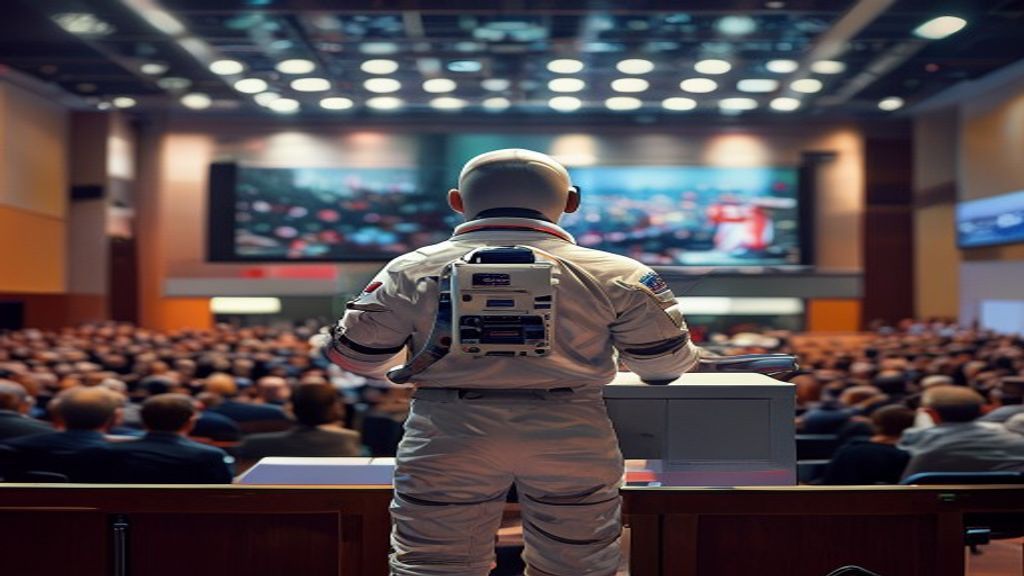
NASA's behavioral scientist Suzanne Bell's extraordinary morning routine: waking up at 5, managing astronauts' stress
28.07.2026 03:00 · 16 hour ago · Credibility: 70% · 7

Point Summary
- ▸Dr., who directs the Behavioral Health and Performance Laboratory at NASA's Johnson Space Center. Suzanne Bell helps astronauts perform in high-stress environments.
- ▸Bell wakes up at 5 in the morning without using an alarm, and this routine sets an example for astronauts in stress management.
- ▸An organizational psychologist, Bell's work focuses on increasing the mental toughness of astronauts.
Dr., who directs the Behavioral Health and Performance Laboratory at NASA's Johnson Space Center. Suzanne Bell studies how astronauts can perform best in high-stress environments. Bell's mission is to provide astronauts with not only technical skills, but also mental toughness and stress management.
What happened?
Dr. Suzanne Bell is the head of NASA's Behavioral Health and Performance Laboratory. This laboratory was established to help astronauts cope with the psychological challenges they may encounter during long-term space missions. Bell's work focuses on how to optimize performance in high-stress environments. Waking up at 5 a.m. has been Bell's routine for years. The interesting thing is that this awakening occurs without using an alarm. Bell states that this habit inspires astronauts in self-discipline and stress management.
background
NASA's Johnson Space Center plays a critical role in the training and preparation of astronauts. The Behavioral Health and Performance Laboratory was established to support not only the physical but also the mental health of astronauts. The work of this laboratory focuses on understanding and managing the psychological difficulties that astronauts may encounter during long-term space missions. Organizational psychology forms the basis of Bell's work. This field explores how individuals and teams can work more effectively in stressful environments.
The source text did not include detailed information about the details of the work in Bell's laboratory or specific studies with astronauts.
Why is it important?
Dr. Suzanne Bell's work is of great importance for the future of space missions. The psychological difficulties that astronauts may encounter during long-term space missions are a critical factor for the success of the missions. Bell's work on stress management and mental toughness helps astronauts cope with these challenges. Additionally, Bell's morning routine not only inspires self-discipline but also inspires astronauts. This routine sets an important example of personal development and stress management.
What do experts and parties say?
In the source text, Dr. No direct quotes from Suzanne Bell or the opinion of any other expert were included. There is no detailed explanation or comment about Bell's work.
What to watch next?
Dr. Examining Suzanne Bell's work and the activities of the Behavioral Health and Performance Laboratory in more detail is important for understanding the studies on the psychological health of astronauts. Additionally, the applicability of Bell's approaches to morning routine and stress management can be investigated in other areas. The source text did not contain information about specific steps or developments to be followed on these issues.
Nokta Analysis
Language Fluency: 90%This news came from Dr. working at NASA's Johnson Space Center. It focuses on Suzanne Bell's work and personal routine. The source text includes basic information about his role in Bell's laboratory and his work on astronauts' stress management and mental toughness. However, the news is based on only ONE source, and that source is just the first part of an interview from The Guardian. The report mentions Bell's morning routine and the general purpose of the laboratory, but does not provide details of the studies, specific studies with astronauts, or other expert opinions. Therefore, the reliability and accuracy of the news is limited only by the content of the source text. No cross-validation with external sources was performed.
Transparent Sources
Related News

New theory that humans may have come to Earth from space shakes the scientific world
Magnetic field mystery behind Jupiter's giant moons, Saturn's only Titan
NASA Astronaut Chris Williams Returned to Earth