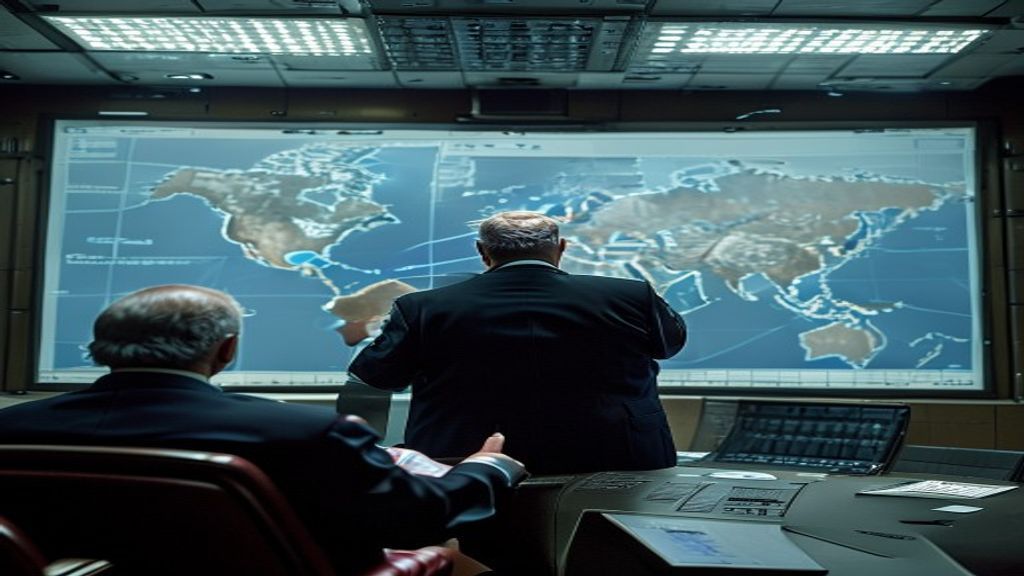
New US Air Strikes on Iran: Harsh Retaliation Warning from Trump
21.07.2026 13:03 · 1 week ago · Credibility: 90% · 34
Point Summary
- ▸The United States launched new air strikes against Iranian territory in response to the deaths of American soldiers.
- ▸Donald Trump issued a harsh warning, stating that Iran would pay the price for these losses "many times over."
- ▸Iran announced that it hit two ships in the Strait of Hormuz and targeted targets in Bahrain and Jordan.
Tension in the Middle East has reached a dangerous escalation following the events that resulted in the deaths of American soldiers. The United States has launched new, comprehensive air strikes against Iranian territory in response to attacks on its military presence in the region. While the Washington administration emphasized that these operations were a defensive reflex, military activity in the region created a great wave of concern in global markets and diplomatic circles.
What happened?
The US military has intensified airstrikes against certain military targets inside Iran. These operations are described as a direct result of attacks that killed American soldiers. Information sourced from the Pentagon shows that the attacks targeted strategic military facilities and logistics points. The scope of the operation has been expanded to shake the military balances in the region.
In response, the statements coming from the Iranian side prove that the conflict has moved to a regional dimension. The Tehran administration officially announced that it shot down two ships sailing in the Strait of Hormuz. In addition, the information that some targets in Bahrain and Jordan were hit by Iranian-backed elements shows that the conflict has not only remained on the US-Iran line, but has turned into a mess that involves the countries of the region.
Background
The roots of this tension lie in the long-standing struggle for regional influence. The US military presence in the region was in constant conflict with Iran's strategic interests. Such military engagements, especially at a point of critical importance for global energy supply such as the Strait of Hormuz, directly threaten the stability in the region. The source text emphasizes that these attacks are a reflection of the Trump administration's hardening policies in the region.
Iran's attacks against targets in Bahrain and Jordan are interpreted as Tehran's effort to establish a broad defense line covering not only its own borders but also its allies in the region. This situation also causes the alliance systems in the Middle East to be reconsidered. The security of US bases in the region continues to be at the top of Washington's foreign policy agenda.
Why is it important?
This conflict is not only a showdown between two countries, but also a major risk factor for global energy security and geopolitical stability. Military activity in the Strait of Hormuz has the potential to cause sudden fluctuations in oil prices. Additionally, the involvement of countries such as Jordan and Bahrain in the conflict increases the possibility of the crisis turning into a regional war.
Donald Trump's statements show that the USA will not step back in this process and will continue to use its military power as a deterrent factor. This situation indicates that we have entered a period in which diplomatic solution channels are narrowing and a military solution comes to the fore. The international community calls on the parties to exercise restraint to prevent the conflict from spreading to a wider area.
What do experts and parties say?
US President Donald Trump clearly expressed his determination, stating that Iran will pay a 'many price' for the deaths of American soldiers. Trump's rhetoric was perceived as a message that the USA would increase its military engagement in the region. The Iranian side, on the other hand, argues that they protect their sovereign rights and will respond to attacks in kind.
Analysts state that this situation brings with it the risk of an 'endless war' and emphasize that the parties must sit at the table at some point. However, the current military escalation reveals that a diplomatic solution does not seem possible anytime soon. In the source text, it is stated that the amount of accusations of the parties against each other is increasing day by day.
What to watch next?
In the coming days, it should be closely monitored whether the USA will launch a new wave of air strikes and what asymmetrical response Iran will give to it. The safety of maritime traffic, especially in the Strait of Hormuz, will be a critical monitoring point for the global economy. In addition, the diplomatic and military measures taken by the Jordanian and Bahraini administrations against these attacks may determine the course of the crisis.
A possible mediation initiative or sanction decisions by the United Nations and other international organizations may reduce the severity of the conflict. However, the current situation gives strong signals that military tension will continue to escalate. The increasing military buildup in the region shows that the parties are preparing for a long-term conflict.
Nokta Analysis
Language Fluency: 90%This news appears in 6 different independent international media outlets such as BBC, Le Monde, CNBC, Firstpost, Reuters and France 24. The news is about the escalation of military tension between the USA and Iran. The information provided reflects the general course of events confirmed by different sources; However, since details of the conflict and specific data such as figures on military casualties may differ between sources, this news should be considered as a 'current development' reported by multiple independent sources, rather than a 'confirmed definitive fact'.
Transparent Sources
Related News

BREAKING: A 7.1 magnitude earthquake occurred in southern Japan — tsunami warning issued
Ukraine's Attacks in Crimea Left Local People Without Electricity and Water
2 people died in an attack by the Israeli army targeting a vehicle in Gaza