Huge Protest from Environmental Groups in France Against Pesticides Threatening the Bee Population
22.07.2026 03:21 · 6 day ago · Credibility: 37% · 55
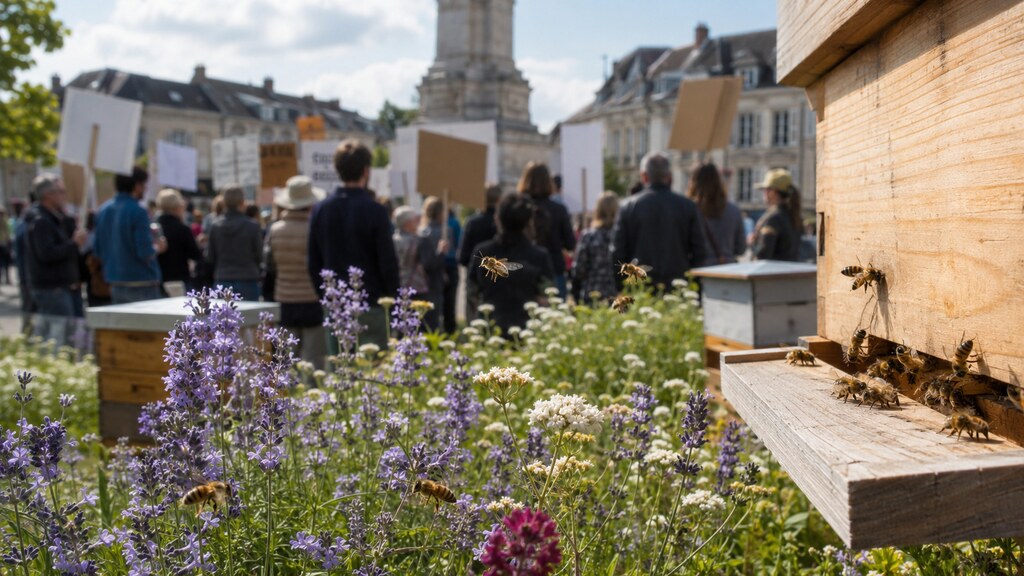
Point Summary
- ▸French environmental groups have launched a widespread response against the use of pesticides that cause bee deaths.
- ▸Drawing attention to the critical role of bees in the ecosystem, activists demand stricter control and bans from the government.
- ▸The conflict between efficiency concerns in the agricultural sector and environmental sustainability has become central to the French agenda.
The devastating effects of pesticides used in agricultural production in France recently, especially on bee populations, have become the main agenda item of environmental groups. Non-governmental organizations and ecology advocates organized across the country harshly criticize the government's current policies on agricultural chemicals, emphasizing the vital importance of bees for biodiversity and food security. The main motivation for the protests is the fact that disruptions in the pollination processes of bees directly threaten not only local agriculture but also the global food chain.
What happened?
French environmental groups have taken action against the toxic effects on bees of pesticides known as 'neonicotinoids', which are widely used in the agricultural sector. Activists argue that these chemicals disrupt the nervous system of bees, causing them to lose their ability to navigate and cause mass deaths. In the actions taken, it is stated that these substances used to increase agricultural productivity destroy the self-renewal capacity of the ecosystem in the long term.
In the regions where protests are concentrated, tensions between farmers and environmentalists are observed from time to time. While farmers argue that alternative methods are costly and may lead to crop loss, environmentalists state that the protection of nature should be a priority above economic interests. Although government officials have not yet taken a final ban decision on the issue, they are giving signals that inspections will be increased.
Background
France, as one of Europe's largest agricultural producers, has been following a controversial path in the use of chemical fertilizers and pesticides for many years. Although this detail is not included in the source text, the 'Farm to Fork' strategy to reduce pesticide use across the European Union shows that these discussions in France are actually linked to wider European policy. Bee deaths have shown a serious downward trend across Europe in the last decade, causing biologists to warn of 'ecological collapse'.
There have been similar ban attempts in the past years, but these processes progressed slowly due to the pressure of agricultural lobbies and the lack of alternative medicines. Environmental groups claim that current legal regulations contain loopholes and that companies continue to use these loopholes to introduce derivatives of banned substances into the market. This situation causes the environmental movement in France to wage not only a protest but also a legal struggle.
Why is it important?
Bees manage the pollination process, which plays a key role in the realization of approximately one-third of the world's crop production. A decline in the bee population directly affects not only honey production but also the supply of essential foods such as fruits, vegetables and nuts. This has the potential to create a domino effect that could lead to increases in food prices and food shortages in the long term.
Additionally, the disappearance of bees means that other living species in the ecosystem will be harmed due to the disruption of the food chain. This reaction in France is seen not only as an environmental sensitivity, but also as an effort to protect humanity's future food security. There is broad agreement in the scientific community that if the use of these chemicals is not stopped, the short-term increase in agricultural productivity will result in a long-term ecological disaster.
What do experts and parties say?
Direct quotes from the parties are not included in the source text. However, the general trend is that while environmental groups emphasize 'preservation of natural balance', agricultural producers put forward arguments of 'economic sustainability and food supply security'. Experts state that the effects of pesticides are not limited to bees only, but also interfere with soil quality and groundwater, and that a more holistic agricultural policy is needed.
What to watch next?
The steps to be taken by the French government with the Ministry of Agriculture in the coming period are of critical importance. Whether a new restriction package will be announced, especially for the use of pesticides, will determine the dose of actions of environmental groups. In addition, the general direction of the European Union's agricultural policies will also affect local decisions in France. The public should closely follow the results of independent scientific research on bee deaths and how these results will be reflected in legal regulations.
Nokta Analysis
Language Fluency: 90%This news is based on a single news source from NTV. Since no independent cross-reference on the subject can be found, the accuracy of the information provided cannot be confirmed. While the news reflects general trends in environmental movements in France, specific event details are limited.
Transparent Sources
Related News

BREAKING: Harsh warning from Meteorology: Windy weather conditions will start from tomorrow

Face to face with giant sharks in Ireland: Those who track the mysterious giants

UN Report: Global Hunger Levels Fall for Third Year, But Regional Differences Remain