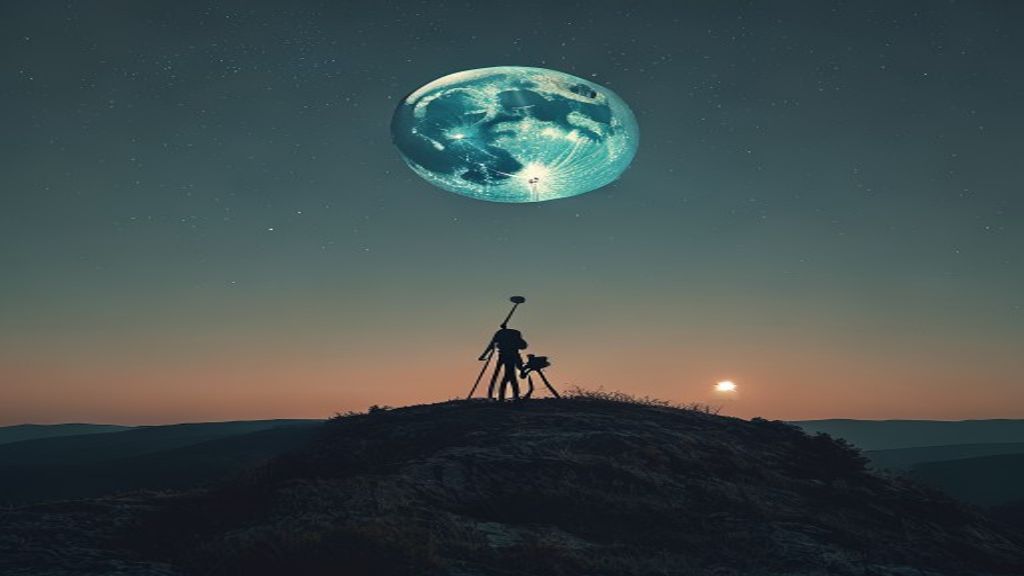
Huge Crater Discovered on Google Earth: May Be Traces of an Ancient Meteor Impact
21.07.2026 15:31 · 1 week ago · Credibility: 83% · 41
Point Summary
- ▸An amateur astronomer noticed an unusual formation on Google Earth while preparing for camp.
- ▸Initial investigations indicate that the area may be a 390 million-year-old meteor crater.
- ▸Microscopic analyzes and field studies are awaited for scientific certainty.
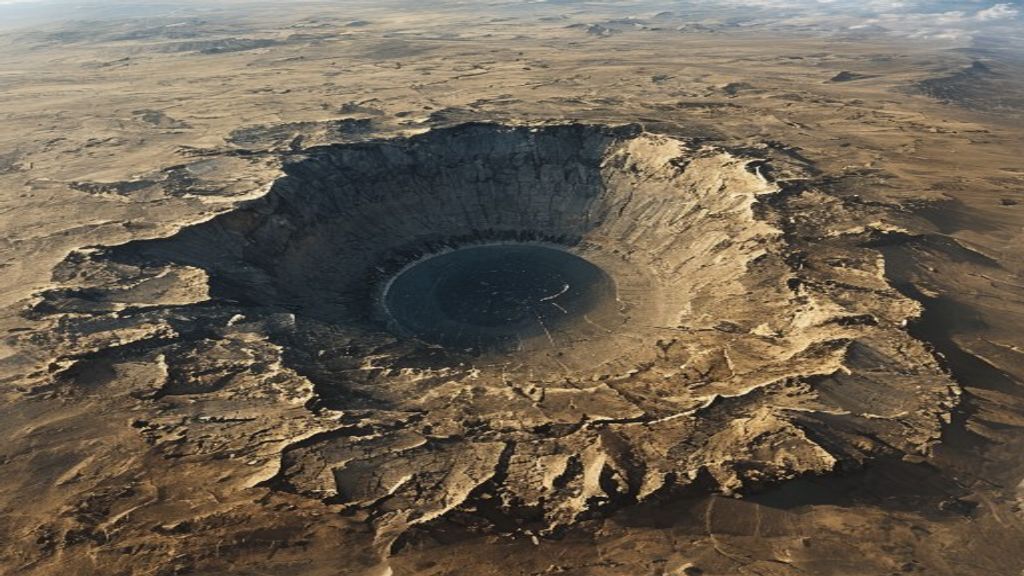
The opportunities offered by technology continue to open new doors through which amateur observers can contribute to the world of science. Finally, the investigations made on Google Earth by an amateur astronomer who was preparing for a camping holiday revealed a huge crater that has the potential to turn into a great geological discovery. This circular structure, detected on satellite images, draws attention at first glance with its distinct separation from the geographical texture of the region.
What happened?
An amateur astronomer came across an unusual circular formation while scanning the land via Google Earth. The topographic structure of the region gives the impression that it was created by a high-energy external impact rather than a natural erosion process. Initial evaluations show that this formation may be the result of a meteor impact dating back approximately 390 million years. Although this detail is not included in the source text, it is known that similar discoveries usually need to be confirmed by examining the rock structure in the region.
The person who made the discovery reported the situation to the relevant scientific authorities. For now, the samples taken from the region are expected to be examined at the microscopic level. These analyzes will reveal whether the minerals in the region have changed under high pressure and temperature (shock metamorphism). If these findings are confirmed, the crater in question will become an important source of data about the Earth's geological past.
Background
Most of the craters on Earth are erased over time due to the protective effect of the atmosphere and geological mobility (tectonic plates, erosion, volcanism). However, some regions have suitable geological conditions to preserve such ancient traces. 390 million years ago corresponds to a period when the Earth underwent major biological and geological changes. Such an impact may have had serious effects on the ecosystem at that time.
Platforms such as Google Earth have become exploration tools for scientists and amateur researchers, providing detailed mapping of previously inaccessible regions. Ancient impact traces have been detected in different parts of the world using similar methods before. This proves once again how critical the role of amateur astronomers and enthusiasts can be in the scientific discovery process.
Why is it important?
This discovery means not only the discovery of a crater, but also the completion of a missing piece of Earth's cosmic past. An impact trace from 390 million years ago may provide important clues about the meteor density at that time and the external threats the Earth was exposed to. In addition, such craters serve as unique laboratories for geologists, thanks to the special mineral structures formed at the time of impact.
This event is also very valuable in terms of society's participation in scientific processes. The transformation of an amateur's observation through a simple map application into an academic study shows that science is accessible to everyone. Such discoveries trigger public scientific curiosity and raise awareness for the preservation of local geological heritage.
What do experts and parties say?
According to the information in the source text, the amateur astronomer who made the discovery states that the possibility of the region being a meteor crater is quite high. However, the scientific community is cautious that microscopic analysis results should be waited to make a definitive judgment. At this stage, field studies and laboratory tests are considered the most important stages to confirm the geological structure of the region.
What to watch next?
In the coming period, soil and rock samples to be taken from the region are expected to be examined in a laboratory environment. In particular, the shock marks on quartz crystals will be the strongest evidence to prove whether the impact was caused by a real meteor. In addition, geological maps of the region will need to be reviewed and satellite imaging studies will need to be deepened to determine whether similar structures exist in the surrounding area.
The scientific world closely follows the results of such discoveries. If it is determined that the crater is of meteor origin, this area can be protected and declared a geological protected area. The data obtained in the later stages of the research will be published in relevant academic journals and added to the literature.
Nokta Analysis
Language Fluency: 90%This news is about developments regarding a possible meteor crater discovered via Google Earth. The issue was also covered in international news sources such as CBC and News18. This shows that the news was confirmed by more than one independent source. However, the statement 'confirmed' does not mean that it is certain that the crater was caused by a meteor; It just means that the news of the discovery was reported in different media. Microscopic analysis results are awaited for scientific certainty.
Transparent Sources
Related News

'Upton Lovell Shaman' from 4 thousand years ago: DNA analysis revealed that she was a woman

Could it be a game that killer whales hit their prey so hard that they explode?
BREAKING: Unexpected help for astronomers: Vantablack